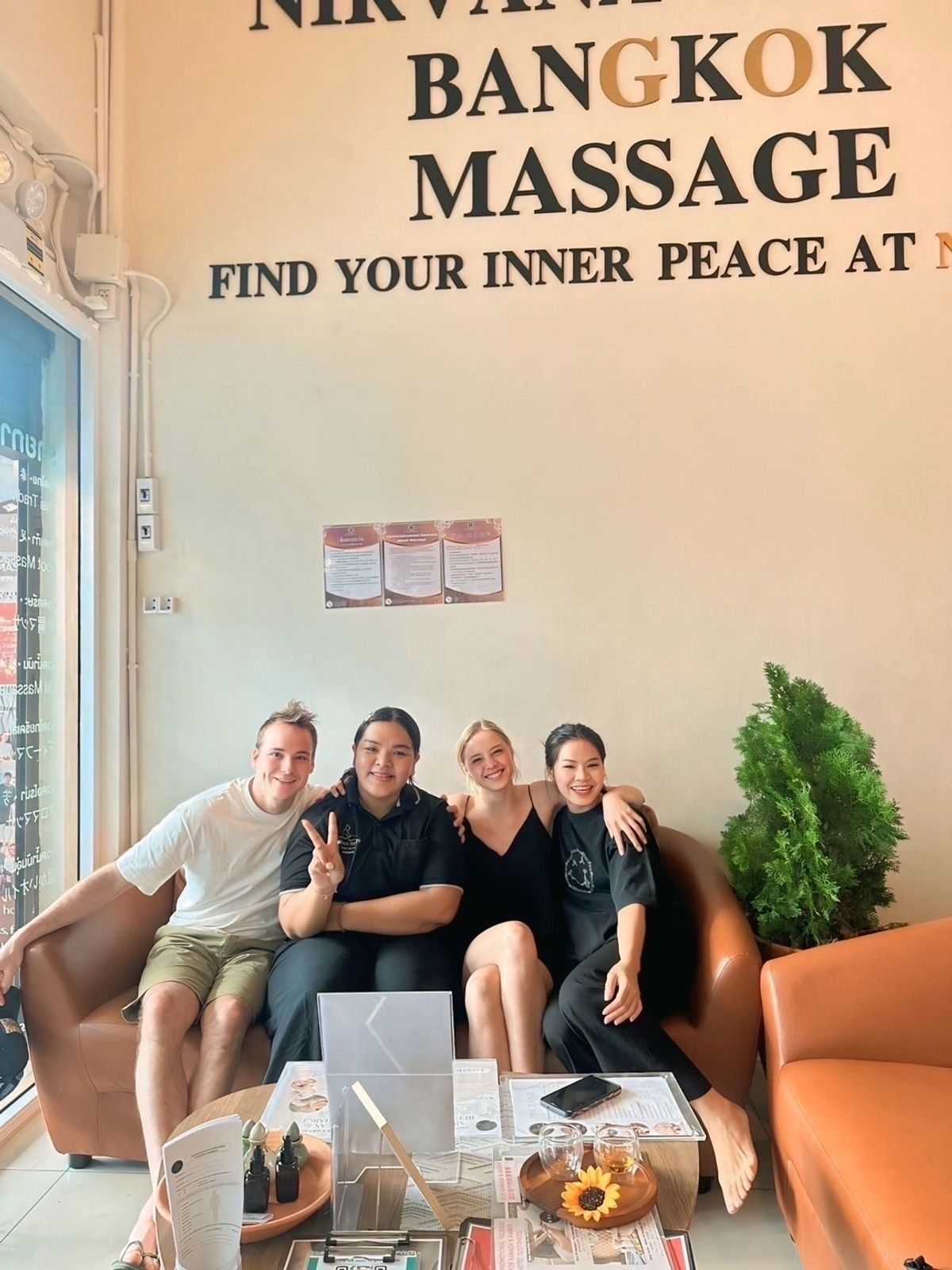
Thailand's massage tradition is taught in formal schools and practised by excellent therapists throughout Bangkok. It is also true that similar-looking signs can advertise a completely different business. You do not need local knowledge to tell the difference; transparency is the reliable signal.
Six signs of a proper shop
- Prices are public. Treatments, durations and prices should be visible before you enter.
- No street touts. A professional studio does not need people beckoning passers-by inside.
- A visible reception area. You should be able to see how the business operates from the entrance.
- Normal, welcoming frontage. A relaxing treatment room may be dim; the shop front should not be opaque or designed to hide what happens inside.
- Practical therapist clothing. Uniforms or workwear are a good sign.
- Detailed reviews. Look for comments about treatment, pressure, cleanliness and communication—not just a stream of vague five-star ratings.
Questions worth asking
These questions are ordinary and a reputable reception team should answer them plainly: Are therapists trained? Is linen changed between guests? Can I request a female therapist? Is the menu price the final price? Do therapists earn commission that could create upselling pressure?
What a normal session looks like
First, you choose a treatment and duration. For traditional Thai massage, you change into loose clothing; for oil massage, you are given disposable underwear and remain draped throughout. The therapist should ask or check about pressure. bao bao (เบา ๆ) means gentler; nak nak (หนัก ๆ) means firmer. Pain that makes you tense or hold your breath is a reason to ask for less pressure.
Only the area being worked on is uncovered. There should be no negotiation about services outside the menu, and you should be able to end the session at any time.
Red flags that mean leave
- A different price appears after the treatment begins.
- Someone suggests a service not on the menu.
- Touching goes beyond what you agreed to.
- You are pressured to add time or treatments.
- A door is locked or you cannot leave freely.
Price is not the whole story
A 60-minute Thai massage can range from roughly ฿250 at a basic shophouse to ฿1,500 or more at an upscale central spa. Price often reflects location and facilities more than therapist skill. Compare a visible menu, reviews and hygiene practices rather than assuming either cheap or expensive is automatically better.
For solo travellers
Book by message when you can, request a therapist gender if you prefer, and ask reception to arrange a Grab after a late session. A legitimate shop will handle each request without making it awkward.
At Nirvana Treats, prices are published, each guest receives fresh linen, therapists can be requested by preference subject to availability, and there is no mid-treatment upselling. This guide is still useful wherever you book in Bangkok.
Questions before you book?
Ask us directly—clear answers are part of a proper massage experience.